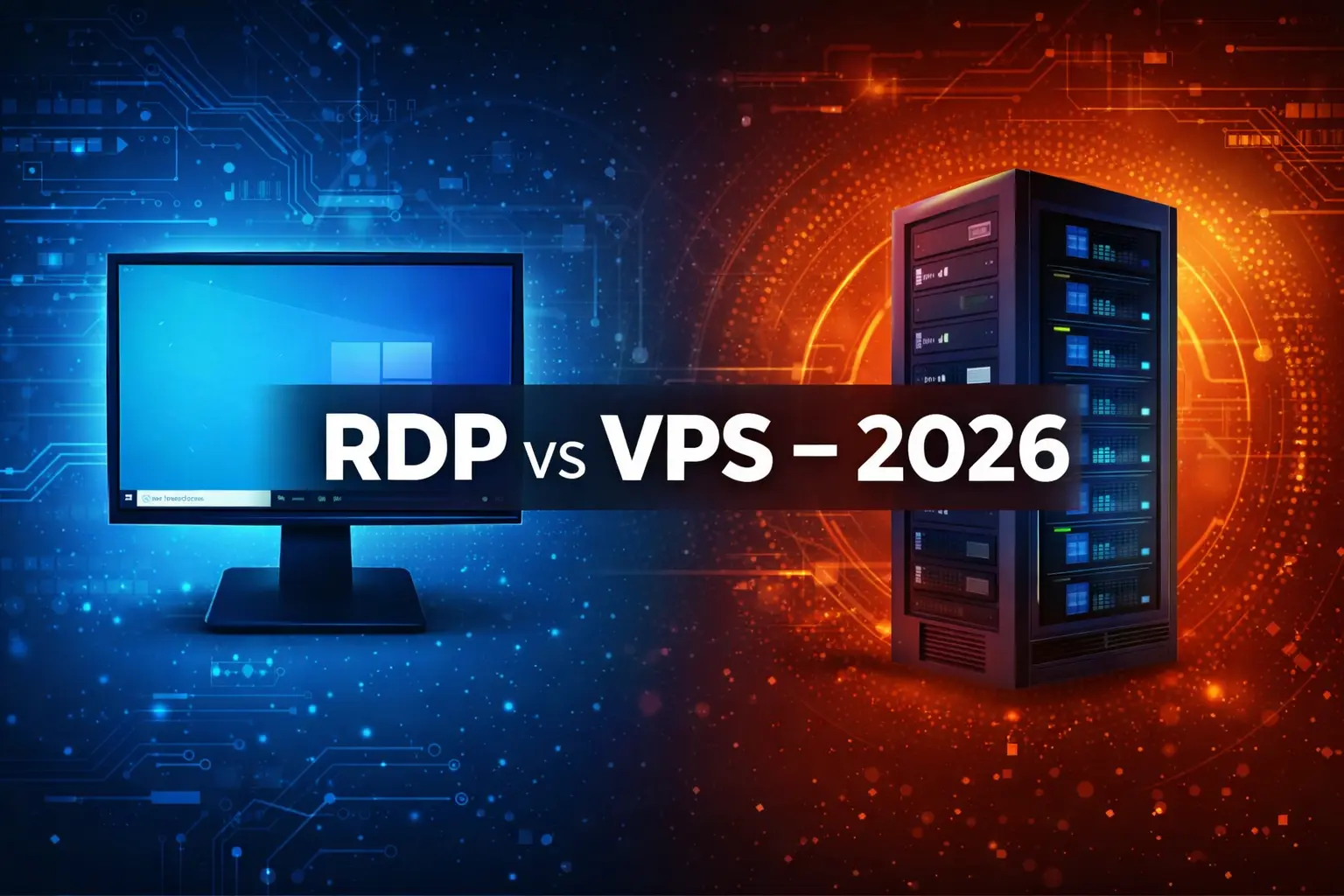
RDP vs VPS is one of the most common comparisons in remote computing today.When choosing a remote computing solution, many users feel confused between RDP and VPS. While both allow remote access to servers, they serve different purposes and offer different levels of control, flexibility, and performance.
In 2026, with the growth of remote work, trading bots, and cloud hosting, understanding the difference between RDP and VPS is more important than ever.
In this guide, we’ll explain what RDP and VPS are, their main differences, and which one is best for your needs.
What Is RDP?
RDP (Remote Desktop Protocol) is a Microsoft technology that allows users to connect to a remote Windows server with a full graphical desktop interface.
It is commonly used for trading, automation, remote work, and managing Windows servers from anywhere in the world.
What Is VPS?
VPS (Virtual Private Server) is a virtual machine created on a physical server. It provides dedicated resources such as CPU, RAM, and storage.
Unlike RDP, a VPS gives full root or administrator access, meaning users can install any operating system (Windows or Linux) and configure the server as they want.
VPS is commonly used for web hosting, application hosting, development environments, and advanced server setups.
RDP vs VPS: Key Differences
- Access Level
RDP provides access to a Windows desktop environment.
VPS provides full server-level access with root/administrator control. - Operating System Flexibility
RDP is usually Windows-based.
VPS supports both Windows and Linux. - Customization
RDP has limited customization.
VPS allows full customization and configuration. - Performance
RDP performance depends on server configuration.
VPS performance depends on allocated dedicated resources. - Best For
RDP is best for trading, remote desktop use, and simple tasks.
VPS is best for hosting websites, running applications, and advanced server control.
Who Should Choose RDP?
RDP is ideal for users who need a ready-to-use Windows desktop without managing a full server.
It is perfect for:
- Forex traders using MT4/MT5
- Users running automation tools
- People who need remote access to a Windows environment
- Businesses needing multiple remote desktop users
If you want a simple solution without managing server configurations, RDP is usually the better choice.
Who Should Choose VPS?
VPS is best for users who need full control over their server environment.
It is ideal for:
- Web hosting
- Developers
- Application hosting
- Running custom server setups
- Businesses needing scalable infrastructure
If you require full root or administrator access and flexibility, VPS is the better solution.
| Feature | RDP | VPS |
| Access Type | interface | full virtual server |
| OS Options | Mostly windows | Linux & Windows |
| Control Level | Limited | Full root/admin access |
| Technical Setup | Simple | Requires server knowledge |
| Best For | Traders, automation users | Developers, hosting |
| Scalability | Limited | Highly scalable |
Final Verdict: RDP vs VPS – Which Should You Choose?
There is no one-size-fits-all answer.
If you need a ready-to-use Windows desktop for trading, automation, or remote work, RDP is the best option.
If you need full server control, scalability, and flexibility, VPS is the better long-term solution.
Before choosing, define your technical needs, budget, and scalability requirements.
If you’re looking for secure and high-performance Windows RDP solutions, check out our RDP plans here.
RDP vs VPS: Security Comparison
Security is another important factor when comparing RDP vs VPS.
RDP accounts are often targeted by brute-force attacks if not properly secured with strong passwords and firewall rules.
VPS environments, on the other hand, allow users to configure custom firewalls, install security tools, and control access permissions at a deeper level.
If security and server customization are your priority, VPS offers more flexibility. However, a properly configured Windows RDP can also be secure for trading and automation purposes.
RDP vs VPS: Pricing Differences
When comparing RDP vs VPS pricing, RDP plans are usually more affordable for beginners. They come pre-configured and require minimal setup.
VPS pricing depends on resources such as CPU cores, RAM, storage type, and bandwidth. The more control and flexibility you need, the higher the cost may be.
For traders and automation users, RDP often provides better value for money. For developers and businesses, VPS offers better scalability and long-term control.
RDP vs VPS: Which One Is Better for You?
Choosing between RDP and VPS ultimately depends on your technical expertise, performance requirements, and long-term goals. If you want a ready-to-use Windows environment with minimal configuration, RDP is often the simplest and most cost-effective solution. On the other hand, if you need full server control, custom configurations, and scalability, VPS hosting provides greater flexibility. Understanding your specific use case—whether trading, development, or business automation—will help you make the right decision.
👉 Explore our Windows RDP Plans
👉 Compare Our VPS Hosting Solutions
What is the main difference between RDP and VPS?
RDP is a remote desktop connection to an existing Windows server, while a VPS is a virtual private server that gives you full control over an isolated environment. RDP focuses on remote access, whereas VPS focuses on server infrastructure and customization.
Is RDP better than VPS for Forex trading?
RDP is often preferred for Forex trading because it provides stable remote access with low latency and pre-configured environments. However, VPS offers more control if advanced customization is required.
Can I install software on both RDP and VPS?
Yes. On RDP, you can install software depending on the provider’s restrictions. On a VPS, you typically have full administrative control, allowing you to install and configure almost anything.
Which is more secure: RDP or VPS?
Both can be secure when properly configured. VPS allows deeper security customization, while RDP security depends heavily on the hosting provider’s configuration.
Should beginners choose RDP or VPS?
Beginners often find RDP easier because it requires less technical setup. VPS is better suited for users who need full server control and are comfortable managing system configurations.